If you are looking at mixed-use retail opportunities in Queens, one truth matters right away: Queens is not one market. A storefront that looks promising on paper can perform very differently depending on the exact block, transit access, frontage, and lease structure. If you want to evaluate space more strategically, this guide will walk you through what to study before you commit. Let’s dive in.
Why Queens draws retail interest
Queens offers scale, density, and a broad consumer base. In 2024, the borough’s population was estimated at 2,316,841, with 47.6% of residents foreign-born and 55.4% speaking a language other than English at home. In 2022, Queens also recorded 44,991 employer firms, 51,188 employer establishments, and $23.0 billion in retail sales.
Those figures help explain why so many investors and business owners look closely at Queens mixed-use buildings. At the same time, boroughwide numbers can only tell you so much. In Queens, performance often changes from one corridor to the next, and sometimes from one block face to another.
Start with the block, not the borough
One of the most useful ways to evaluate Queens retail is to think small before you think big. The NYC Department of Small Business Services uses Commercial District Needs Assessments to study storefront mix, consumer traits, streetscape conditions, merchant feedback, and shopper patterns. That approach reflects how mixed-use retail really works in Queens.
If you only look at zip code averages or neighborhood reputation, you can miss what actually drives results. A space near an active transit node, strong pedestrian flow, and visible storefronts may outperform another space in the same neighborhood that sits farther from a station or on a weaker retail stretch.
Queens has several retail submarkets
Western Queens opportunities
Long Island City continues to stand out for ongoing development and a growing mix of residential and commercial activity. Queens Community Board 2 describes it as a neighborhood with rapid development, waterfront parks, and a thriving arts community. For mixed-use investors, that can make it worth watching closely at the building and corridor level.
Astoria offers a different kind of retail environment. SBS describes Astoria as home to residents from more than 80 countries, with major commercial corridors on Steinway Street, Broadway, Astoria Boulevard, Ditmars Boulevard, and 30th and 36th Avenues. Strong transit access and a walkable, village-like shopping environment can support active ground-floor uses.
Sunnyside also deserves a more targeted read. Its commercial activity is shaped heavily by the 7 train and nearby bus service, and SBS notes that foot traffic is driven mainly by local and nearby residents. The same assessment points out that blocks farther from subway stations, especially 47th and 48th Avenues, tend to see lower foot traffic and less street activity.
Central and northeast Queens opportunities
Jackson Heights is one of the clearest examples of a transit-driven destination retail market. SBS describes it as culturally rich, with 160 languages spoken, and anchored by the Jackson Heights-Roosevelt Avenue/74th Street-Broadway transportation hub. That hub connects five subway lines, several bus routes, and a direct link to LaGuardia Airport.
The retail character there is also highly specific by corridor. SBS notes that 74th Street serves as the heart of Queens’ Little India, while Roosevelt Avenue hosts Latino and Latin American businesses. It also points to crowding, darker conditions under the elevated tracks, and limited public space, which are important physical factors when you assess storefront visibility and shopper experience.
Downtown Flushing operates as a major central business district. The Neighborhood 360 assessment describes it as a safe, 24/7 district with high foot traffic throughout the day and night. Main Street, Roosevelt Avenue, Northern Boulevard, Union Street, 39th Avenue, and College Point Boulevard form the core commercial network.
That said, strong activity does not remove friction. Merchants in the Flushing study identified commercial rent and lease costs, parking and transit constraints, and traffic and pedestrian congestion as major challenges. If you are underwriting a space there, those pressures belong in your analysis from day one.
Downtown Jamaica is another regional node with meaningful pedestrian volume. NYC DOT reports that the Jamaica Avenue busway serves about 139,000 weekday riders, and the local commercial district assessment highlights wide sidewalks that support window shopping. The area also benefits from proximity to major institutions including courts, colleges, JFK Airport, St. John’s University, the YMCA, and York College.
Why transit matters so much
In Queens, transit is one of the clearest proxies for retail potential. Heavy ridership does not guarantee success, but it can help explain why some mixed-use spaces attract stronger daily visibility than others.
Several Queens transit hubs stand out. MTA’s 2023 station data shows Jackson Heights-Roosevelt Avenue/74th Street-Broadway recorded 14.35 million riders, while Flushing-Main Street recorded 13.88 million. Queensboro Plaza serves about 97,000 riders on an average weekday, and Court Square serves about 59,000.
These numbers matter because mixed-use retail depends on repeat exposure. If a storefront sits near a station, a bus connection, or a major pedestrian route, you are often looking at a different opportunity than a similar unit tucked away on a quieter side street.
Evaluate the ground floor carefully
A good address alone is not enough. In New York City, the physical quality of the ground floor can have an outsized impact on how a space performs.
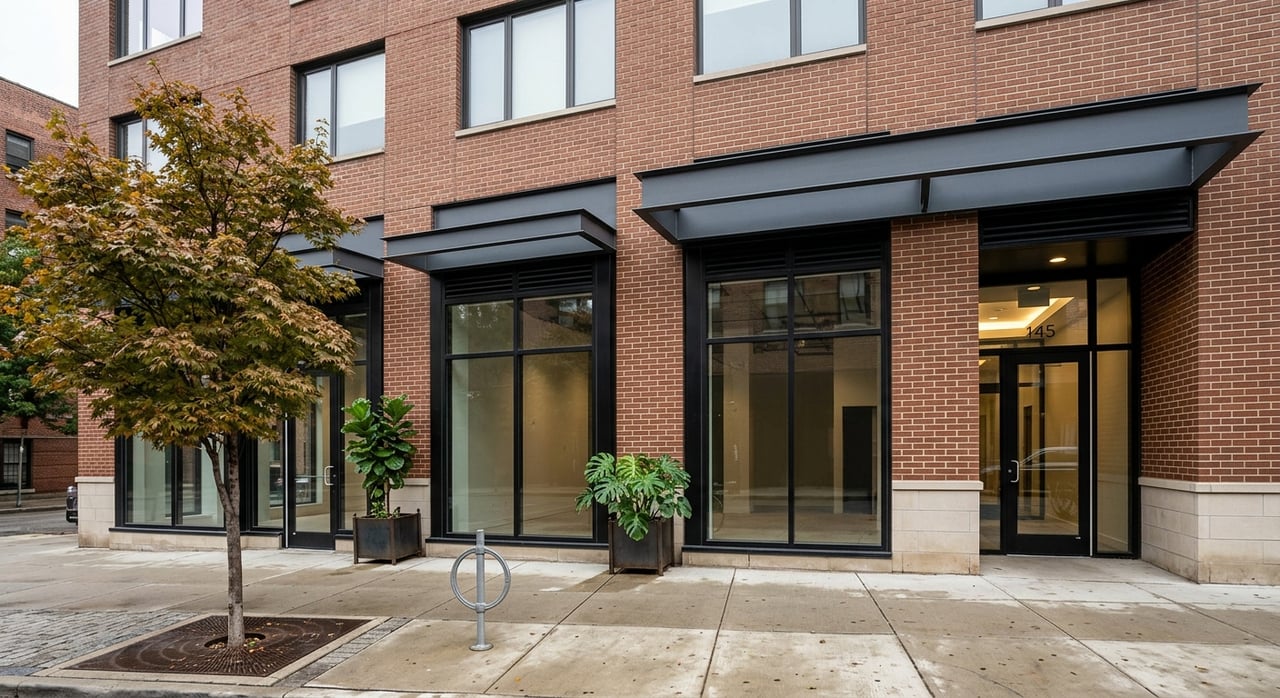
The NYC Zoning Handbook notes that vibrant commercial corridors often rely on transparent show windows and frequent entrances. It also explains that ground-floor use regulations may require neighborhood retail and service uses and minimum transparency, depending on the zoning district and any special overlays.
This is one reason a visible corridor can still have underperforming storefronts. NYC HPD warns that when ground-floor space is designed mainly with housing in mind, it can lead to underused or vacant retail space. HPD’s retail design guidance emphasizes flexible, accessible, and cost-effective layouts, which can make a real difference in how a tenant uses the space.
Confirm zoning before you underwrite
Before you get too far into projections, confirm the zoning and any special district rules. Commercial uses may be allowed in C1 through C8 districts, commercial overlays in residential districts, M1 through M3 districts, and certain special districts, but the exact rules depend on the mapped district.
This step is essential because permitted use, frontage requirements, and design expectations can all shape the value of a mixed-use opportunity. A location may look ideal on the surface, but if the zoning does not align with your intended use, the deal can become more complicated very quickly.
Understand alteration and compliance needs
If the space needs construction, layout changes, or storefront improvements, involve the right professionals early. The NYC Department of Buildings notes that mixed-use alterations may require zoning review and coordination with agencies such as FDNY, DOT, Landmarks, MTA, and DEP.
That kind of review can affect timeline, cost, and feasibility. An architect can help you assess whether the existing shell supports retail, office, or a hybrid ground-floor use before you commit to the lease or purchase.
Review the lease with care
In Queens mixed-use retail, lease structure can shape the success of a deal just as much as the location. Asking rent is only one part of the picture. You also need to compare concessions, buildout responsibility, occupancy costs, and flexibility over time.
NYC SBS offers free legal services for eligible small businesses that need help signing, amending, renewing, or terminating a commercial lease. That makes legal review especially important when the deal moves beyond basic economics and into lease language.
An accountant can also be useful when you need to weigh total cost rather than headline rent. The practical question is not only what the space costs today, but what it may cost to operate and adapt over the life of the lease.
A practical framework for Queens retail evaluation
If you want a more disciplined way to compare opportunities, keep your review process simple and local. Start with the exact building, then widen out to the corridor and surrounding foot-traffic drivers.
A strong Queens mixed-use review often follows this sequence:
- Confirm zoning for the intended use.
- Inspect frontage and visibility from the sidewalk.
- Check transit and pedestrian proxies such as station activity, bus routes, and nearby anchors.
- Evaluate the physical shell for layout, transparency, access, and buildout potential.
- Review lease structure and occupancy costs with the appropriate professionals.
This framework helps you avoid relying on broad neighborhood assumptions. In Queens, the winning opportunity is often the one that works best at street level, not just the one with the most recognizable neighborhood name.
What this means for investors and occupiers
If you are an investor, Queens can offer compelling mixed-use retail opportunities, but only when underwriting reflects real block-level conditions. Strong demographics and major ridership numbers create opportunity, yet they do not erase the need to study visibility, congestion, buildout needs, and lease risk.
If you are a business owner looking for space, the same principle applies. The right storefront is not simply the cheapest or busiest option. It is the one where location, frontage, access, and operating terms line up with how your business actually functions.
Queens rewards nuance. When you treat each corridor as its own micro-market and assess each space with precision, you put yourself in a much stronger position to make a confident decision.
If you are weighing a mixed-use retail opportunity in Queens and want a more strategic, neighborhood-specific perspective, Nadine Nassar can help you evaluate the details that matter most.
FAQs
What makes Queens mixed-use retail different from other NYC markets?
- Queens includes multiple retail submarkets with different transit patterns, customer bases, and corridor conditions, so opportunities should be evaluated block by block.
Why is transit important when evaluating Queens retail space?
- Transit hubs can serve as useful foot-traffic proxies, and areas near major stations or bus corridors often deserve closer review for visibility and daily pedestrian exposure.
What should you check first in a Queens mixed-use building?
- Start by confirming zoning, then assess frontage, transparency, entrances, transit access, and the physical condition of the ground-floor space.
Which Queens neighborhoods are key retail nodes?
- Long Island City, Astoria, Sunnyside, Jackson Heights, Downtown Flushing, and Downtown Jamaica each stand out, but every corridor within those areas should still be reviewed individually.
Why does storefront design matter in Queens mixed-use retail?
- NYC guidance emphasizes that transparent windows, frequent entrances, and flexible ground-floor layouts can support stronger commercial performance than weak or housing-oriented storefront designs.
When should you bring in professionals for a Queens retail deal?
- Legal, accounting, and architectural review become especially important when you are comparing lease terms, estimating buildout costs, or assessing alteration and compliance requirements.