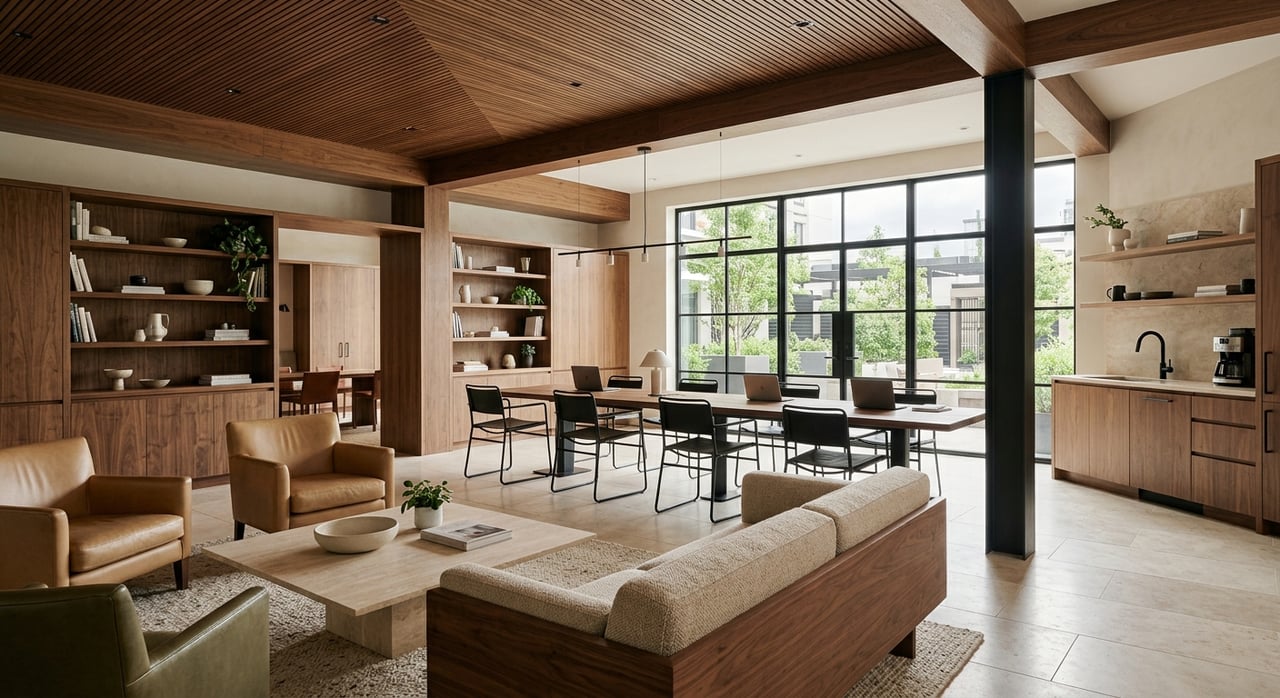
If your workweek no longer fits a simple nine-to-five commute, where you live in Queens can shape your entire routine. You may need a home that feels comfortable during long workdays, a neighborhood that gives you easy transit on office days, and nearby places to step out for coffee, lunch, or a quick reset. The good news is that Queens offers several strong options, each with a different work-life rhythm. Let’s dive in.
Why Queens fits hybrid living
Queens stands out for remote and hybrid work because it often gives you more ways to balance home, commute, and daily convenience. In many neighborhoods, you can choose between newer buildings with amenity packages and older homes with larger layouts and practical floor plans.
That matters when your home has to do more than one job. A good hybrid setup is not only about getting to Manhattan quickly. It is also about having enough space to focus, access to transit when you need it, and a neighborhood that feels livable during the hours you are actually home.
What to look for in a work-friendly home
Before comparing neighborhoods, it helps to know what features support remote and hybrid work best. In Queens, the most useful setup is often a home that balances quiet interior space with practical flexibility.
Key features to prioritize include:
- A flexible second room, alcove, or den
- Strong natural light
- Separation from street noise
- A building lounge or shared workspace in newer developments
- Nearby cafés or commercial corridors for a change of scenery
- Reliable subway, bus, LIRR, or ferry access for office days
In some neighborhoods, that may mean a newer condo or rental building with work-friendly common areas. In others, it may mean a prewar apartment or co-op with larger rooms, better separation, and a calmer block.
Long Island City for turnkey convenience
Long Island City is one of the strongest choices if you want a more seamless hybrid-work setup. The neighborhood offers strong transit access, waterfront parks, and a growing residential landscape shaped by newer development.
For many buyers and renters, the biggest draw is convenience. Some newer buildings in Long Island City advertise shared workspaces, resident lounges, and layouts that support work-from-home routines. That can make daily life feel more efficient, especially if you want your building to provide a backup to your apartment workspace.
Transit is another major advantage. The neighborhood offers access to the 7 train, G train, LIRR, ferry, and buses, which makes office days easier to manage.
The tradeoff is that some blocks can still feel gritty or less shaded than other parts of Queens. If Long Island City is on your list, quieter blocks and higher-floor units may be especially worth considering.
Best fit for Long Island City
Long Island City is best for you if you want:
- Newer buildings and amenity-rich living
- Strong transit options in multiple directions
- Waterfront access and an arts-oriented setting
- A premium live-work setup with less need to leave the building to stay productive
Astoria for café culture and energy
Astoria works well if you want your neighborhood to feel active, social, and easy to navigate without giving up convenient access to Midtown. It offers a broad mix of housing, from single-family homes to postwar co-ops, condos, and upscale rentals.
A major part of Astoria’s appeal is its street life. The area is known for its dense mix of cafés and restaurants, which can be especially useful if you like rotating between home and a neighborhood spot during the week.
Transit is also a strength. Astoria has multiple N and W train stops, plus access nearby through Queensboro Plaza and Queens Plaza connections.
The main consideration is noise. Elevated train corridors and busy commercial streets can affect the feel of a home, so rear-facing or higher-floor apartments may be a better match if quiet is high on your list.
Best fit for Astoria
Astoria may suit you best if you want:
- A lively neighborhood with strong café culture
- Quick access to Midtown
- Several housing types at different price points
- A built-in network of places to work outside your apartment
Sunnyside and Woodside for value and practicality
If your priority is getting more usable space and a quieter daily pace, Sunnyside deserves a close look. The neighborhood is known for practical floor plans, large prewar brick buildings along main avenues, and smaller rowhouses on side streets.
For remote workers, that extra functionality can matter more than flashy amenities. A better layout, a little more breathing room, and a calmer block can make a real difference when you spend most of your week at home.
Sunnyside also offers reliable transit through the 7 train and several bus lines, with practical access into Manhattan. The neighborhood has many restaurants and pubs that serve as local gathering spots, which helps compensate for the lack of a major park.
Woodside can appeal for similar reasons. It shares much of the same western Queens logic, with a local feel and residential scale that may suit buyers and renters who want a less high-intensity environment.
Best fit for Sunnyside and Woodside
These neighborhoods may work well for you if you want:
- Better value for space
- Functional layouts over luxury amenities
- A quieter, more residential rhythm
- Straightforward transit for hybrid commuting
Forest Hills for calm and green space
Forest Hills is a strong option if you want your home base to feel calmer and greener. The neighborhood includes a mix of low- and high-density residential buildings, along with co-ops, condos, rentals, and distinct residential pockets.
For hybrid workers, the appeal is easy to understand. You can build your routine around a quieter apartment, established shopping corridors, and access to larger parks nearby, including Forest Park and Flushing Meadows-Corona Park.
Transit remains a real advantage here. Forest Hills has E, F, M, and R subway service, plus LIRR access, which gives you flexibility on office days.
The tradeoff is that the neighborhood is less nightlife-oriented than some western Queens alternatives. If you care more about calm, space, and livability than late-night energy, that may feel like a benefit rather than a drawback.
Best fit for Forest Hills
Forest Hills may be right for you if you want:
- A quieter home environment
- Access to larger green spaces
- A mix of apartment types and residential settings
- LIRR backup in addition to subway service
Jackson Heights for space and transit density
Jackson Heights is a strong choice if you want value, strong transit, and housing stock with character. The neighborhood is especially notable for large prewar apartment buildings, co-ops, and homes built around private courtyards and gardens.
That housing mix can be very attractive for remote work. Spacious layouts and a more residential feel away from the busiest avenues can support a better day-to-day setup, especially if you need room to carve out a real work zone.
Transit is one of the neighborhood’s biggest strengths. You have multiple 7 train stops, along with E, F, M, and R access at Jackson Heights-Roosevelt Avenue.
Another quality-of-life advantage is the 34th Avenue Open Street, which adds pedestrian and cycling space that can be useful for breaks between meetings. The main tradeoffs are aircraft noise from LaGuardia and limited traditional public green space, so quieter interior units may deserve extra attention.
Best fit for Jackson Heights
Jackson Heights may fit you well if you want:
- Value-oriented buying options
- Spacious prewar layouts
- Excellent transit connections
- An active neighborhood with a more residential feel beyond the main corridors
Flushing for convenience-first living
Flushing is the most transit-heavy and commercially active option in this group. It works best if you like energy, convenience, and a neighborhood where a lot is happening close to home.
The area has one of the city’s busiest downtowns, with significant 7 train activity, extensive bus service, and LIRR access. That makes it a strong fit for hybrid workers who want transportation options and do not mind a busier urban setting.
Flushing also benefits from proximity to Flushing Meadows-Corona Park, which offers a large amount of open space and recreation. At the same time, the neighborhood itself feels lively and dense rather than serene.
If your ideal workweek includes easy errands, robust transit, and a large commercial hub, Flushing may be a smart match. If you need a very quiet residential atmosphere, other neighborhoods may fit better.
Best fit for Flushing
Flushing is likely a good fit if you want:
- Strong transit and commuter flexibility
- Newer condo and larger-building options
- Dense retail and daily convenience
- A busier, urban work-life setting
How to choose the right Queens neighborhood
The best Queens neighborhood for remote or hybrid work depends on how you actually live. Some people want a newer building with lounge space and a short commute. Others would rather have a larger prewar layout, a quieter street, and a neighborhood café they can rely on during the week.
A simple way to narrow your search is to start with your daily rhythm. Ask yourself whether you care most about space, noise level, transit, outdoor access, or built-in amenities.
Here is a quick framework:
- Choose Long Island City if you want the most turnkey, amenity-forward setup.
- Choose Astoria if you want café culture, energy, and quick Midtown access.
- Choose Sunnyside or Woodside if you want value, function, and a quieter pace.
- Choose Forest Hills if you want calm, greenery, and transit backup.
- Choose Jackson Heights if you want spacious prewar housing and excellent transit.
- Choose Flushing if you want urban convenience and a highly connected commercial center.
Final thoughts on Queens work-life fit
Queens does not offer one ideal neighborhood for remote and hybrid work. What it offers is choice. You can find premium live-work convenience, value-oriented space, greener surroundings, café-driven daily life, or transit-heavy urban energy, depending on what matters most to you.
If you are weighing neighborhoods in Queens, the smartest move is to match your home search to your actual schedule and habits. The right fit is not just about where you sleep. It is about where you can focus, recharge, and move through the city with less friction.
If you want a tailored strategy for buying or renting in Queens, Nadine Nassar can help you compare neighborhoods, building types, and work-life priorities with a more personalized lens.
FAQs
Which Queens neighborhood is best for remote work if you want building amenities?
- Long Island City is the strongest fit if you want newer buildings that may include shared workspaces, resident lounges, and a more turnkey live-work setup.
Which Queens neighborhood is best for hybrid work if you want quiet streets?
- Forest Hills, Sunnyside, and parts of Woodside can be strong options if your priority is a calmer residential feel and a quieter daily rhythm.
Which Queens neighborhood is best for hybrid commuters into Manhattan?
- Long Island City, Astoria, Jackson Heights, Forest Hills, and Flushing all offer strong transit access, but the best choice depends on whether you prioritize subway variety, LIRR access, or proximity to Midtown.
Which Queens neighborhood offers the most value for space for remote workers?
- Sunnyside and Jackson Heights often stand out for practical or spacious layouts, especially if you are comparing them with newer, more amenity-driven parts of western Queens.
Which Queens neighborhood is best if you want cafés to work from occasionally?
- Astoria is especially appealing if you want a strong café and restaurant scene that gives you easy options beyond your apartment during the workweek.