If you are looking at Queens investment properties, transit should be near the top of your checklist. In a borough this large, where the mean travel time to work is 42.9 minutes and many households rely on rail access to reach Midtown, Downtown Brooklyn, JFK-area jobs, and other work hubs, location near the right station can shape demand in a real way. This guide breaks down where to focus first, which property types tend to fit transit-rich areas, and what to review before you make a move. Let’s dive in.
Why transit access matters in Queens
Queens is one of the most transit-sensitive markets in New York City. The borough had about 2.32 million residents in 2024, 922,998 housing units, a 44.9% owner-occupied housing unit rate, median gross rent of $1,915, and an average household size of 2.77 people.
Those numbers matter because they point to a large renter base, varied household needs, and strong demand for practical commuting options. At the city level, New York City’s 2023 Housing and Vacancy Survey reported 2,324,000 renter-occupied units and a rental vacancy rate of just 1.41%.
For you as an investor, that means station proximity is more than a convenience feature. It can affect how broad your tenant pool is, how quickly you can lease a vacancy, and how appealing a mixed-use or small commercial property may be.
Transit benefits investors should watch
Properties near strong transit links often benefit from a few simple advantages. The most important one is time savings, especially for tenants who need a direct or reliable trip into major job centers.
Transit access can also support a wider range of users. In Queens, where 47.6% of residents are foreign-born and households are often multilingual and multi-person, neighborhoods with multiple lines or rail options can appeal to a broader mix of renters, commuters, and local businesses.
For commercial and mixed-use properties, foot traffic also matters. Areas around station entrances often have stronger pedestrian activity, which can support ground-floor retail and office uses that depend on visibility and steady daily movement.
Best Queens transit corridors to screen first
Long Island City and Western Queens
Long Island City stands out as the clearest transit-led investment market in Queens. The 7 line serves Court Square, Queensboro Plaza, Hunters Point Avenue, and Vernon Boulevard-Jackson Avenue. Court Square also connects with the E, G, and M, while Queensboro Plaza connects with the N and W. The Long Island Rail Road also serves Long Island City and Hunterspoint Avenue.
This level of connectivity gives you several investment angles to consider. Long Island City is especially relevant if you are reviewing mixed-use buildings, office suites, flexible commercial space, or rental property near major transfer points.
Astoria is another Western Queens area worth screening early. N and W service at Ditmars Boulevard, Astoria Boulevard, 30 Avenue, Broadway, 36 Avenue, 39 Avenue, and Queensboro Plaza helps support demand from renters who want a more direct trip into Manhattan and less dependence on a car.
Queens Boulevard corridor
The Queens Boulevard corridor from Jackson Heights to Forest Hills is one of the borough’s most practical places to start your search. This area benefits from a dense mix of 7, E, F, M, R, and other connecting services across major nodes like Jackson Heights-Roosevelt Avenue, Woodside, Kew Gardens-Union Turnpike, Forest Hills-71 Avenue, Queens Plaza, and Court Square.
For investors, the strength here is flexibility. Transfer-rich stations and multiple service options can support multifamily rentals, neighborhood retail, and mixed-use buildings that benefit from steady pedestrian traffic and broad commuter access.
Several key stops in this corridor are also ADA accessible. That can matter when you are thinking about who can realistically use the property and how wide your future tenant or customer base may be.
Jamaica and Southeast Queens
Jamaica is one of the most important rail hubs in Queens. With the exception of the Port Washington Branch, all Long Island Rail Road branches run to or through Jamaica, and the area connects to AirTrain JFK.
The E and J/Z lines meet key Jamaica stations including Jamaica Center-Parsons/Archer and Sutphin Boulevard-Archer Avenue-JFK Airport. For you, that means Jamaica can make sense if you are targeting commuters, airport-related users, or commercial tenants who value regional access.
Flushing and Northeast Queens
Flushing-Main Street is the terminal stop for the 7 line, and the Port Washington Branch serves Flushing-Main Street, Mets-Willets Point, and Woodside. Woodside also links to the LaGuardia Link Q70 SBS.
That combination gives this submarket a different kind of strength. It can appeal to renters and businesses that value both rail access and airport connectivity, especially where quick regional movement matters.
Property types that fit transit-rich locations
Multifamily rentals
Multifamily rentals are often a natural fit near key Queens transit lines. With average household size at 2.77 people and a citywide rental vacancy rate of 1.41%, well-located rental product deserves close attention.
That does not mean every transit-adjacent property works. It does mean you should look carefully at unit mix, bedroom count, and whether the commute pattern actually matches what local renters need.
Office suites
Small office users tend to care about simple access for staff and clients. In commercial districts that are well served by mass transit, office uses such as legal, accounting, and medical offices can be practical fits.
This is one reason Long Island City comes up so often in investor conversations. Its transit network and mapped commercial districts make it especially relevant if you are evaluating office or flexible commercial space.
Mixed-use buildings
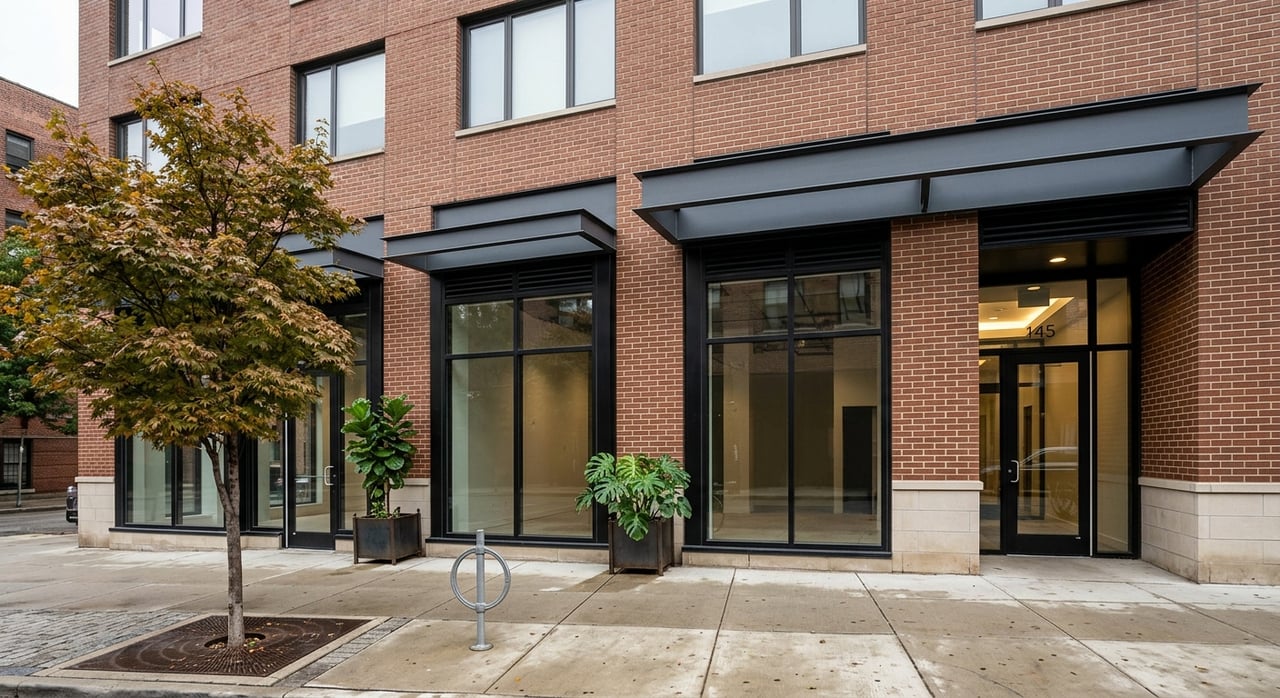
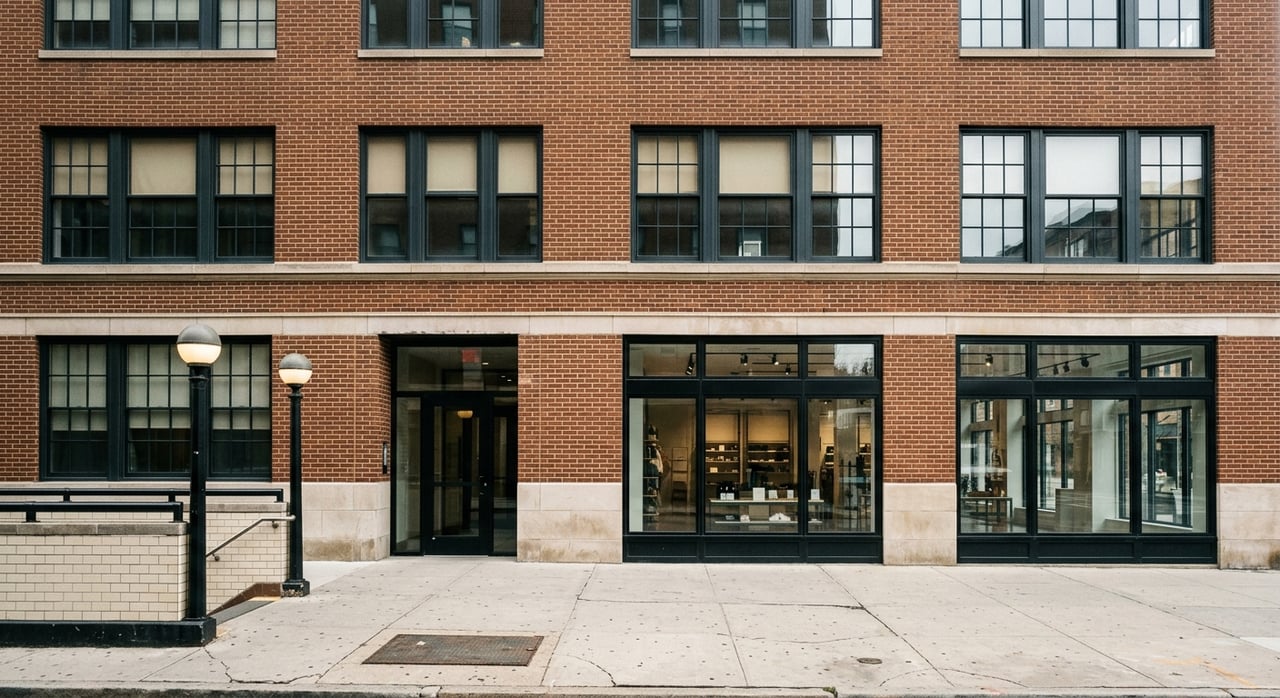
Mixed-use buildings can perform well near station areas because they benefit from both residential demand and street-level activity. In Queens, pedestrian traffic around transit, businesses, parks, and other daily-use destinations can support active ground floors.
In some zoning contexts along transit corridors, ground-floor retail is required to help keep the street active. If you are comparing similar properties, a building close to a station entrance may offer a stronger day-to-day use case than one that is technically nearby but less visible or less convenient to reach.
What tenant demand may look like
Transit-rich Queens properties often attract tenants and users with very practical priorities. The common thread is not luxury alone. It is convenience, direct access, and time savings.
You may find demand from:
- Manhattan commuters who want the shortest and simplest trip possible
- Airport-related workers and service businesses near Jamaica, Sutphin, Woodside, and Flushing
- Neighborhood-serving retailers and professional users who rely on foot traffic and visibility
- Households looking for more bedrooms or a community-oriented setting with strong transit access
This is where a precise, block-by-block review matters. A neighborhood can be transit-rich on paper, but the actual user experience depends on station access, transfers, and the destinations the route serves.
Due diligence questions to ask first
Before you move forward on a Queens investment property near transit, start with the basics. The strongest opportunities usually hold up because the details support the story.
Ask these questions early:
- How far is the actual station entrance, not just the line on a map?
- Is the service useful all day, or is it limited to certain times?
- Does the route go directly to major destinations tenants or customers care about?
- Is the station ADA accessible?
- Do zoning rules support your intended use and parking plan?
- Do local rent levels and vacancy conditions support the investment thesis?
These questions can help you avoid a common mistake. A property may look close to transit online, but if the walk is indirect or the service pattern is limited, the value of that proximity may be weaker than expected.
A smart first-pass Queens shortlist
If you want a focused starting point, begin with the areas that combine rail access, pedestrian activity, and a tenant base that tends to value time savings. In most cases, the best first-pass submarkets are:
- Long Island City, Court Square, and Queensboro Plaza
- The Queens Boulevard corridor from Jackson Heights to Forest Hills
- Jamaica and Sutphin
- Flushing and Main Street
- Astoria
Each of these areas offers a different investment profile. Some are stronger for multifamily rentals, some for mixed-use opportunities, and some for commuter-oriented commercial space.
How to evaluate transit the right way
The biggest takeaway is simple: not all transit access is equal. The number of lines nearby matters, but directness, transfer quality, accessibility, and walkability often matter more.
If you are buying for rental income, leasing potential, or long-term value, it helps to evaluate how a property fits into real daily patterns. That means looking at who uses the station, where the lines go, and how the building’s zoning and layout match the demand around it.
In Queens, transit can be one of the clearest signals of where opportunity starts. If you want strategic guidance on identifying investment properties, mixed-use assets, or commercial leasing opportunities in transit-linked Queens locations, connect with Nadine Nassar for a personalized market consultation.
FAQs
What makes Queens investment properties near transit attractive?
- Queens investment properties near transit can appeal to a broader tenant pool, support lower vacancy risk, and offer stronger potential for mixed-use or commuter-oriented commercial demand.
Which Queens areas have the strongest transit access for investors?
- Strong first-pass areas include Long Island City, Court Square, Queensboro Plaza, Astoria, the Queens Boulevard corridor from Jackson Heights to Forest Hills, Jamaica, and Flushing.
Are multifamily properties a good fit near Queens transit lines?
- Multifamily rentals can be a strong fit because Queens has large households, a substantial renter base, and citywide vacancy conditions that make well-located rental housing worth careful review.
Why is Jamaica important for Queens investment property buyers?
- Jamaica is a major Long Island Rail Road hub with subway and AirTrain JFK connections, which can support demand from commuters, airport-related users, and regional businesses.
What should you check before buying near a Queens station?
- You should confirm the real walking distance to the station entrance, service patterns, destination access, ADA accessibility, zoning compatibility, parking rules, and current rent and vacancy conditions.
Do mixed-use buildings benefit from transit access in Queens?
- Mixed-use buildings can benefit from station-area foot traffic, stronger visibility, and zoning patterns that support active ground-floor retail in some transit-served corridors.